How to Grow Berries
Whether it’s strawberries, blueberries, raspberries, or blackberries, this guide has everything you need - from choosing the right varieties to soil prep, watering, and pest protection - to help your berry plants thrive.
Selecting the Right Variety
There are plenty of varieties to choose from, including boysenberries, blackberries, blueberries, and of course, strawberries. When purchasing raspberries or blackberries, they may not look like much at first, just a simple stem. They won’t have much growth initially, but they will grow rapidly once spring arrives.
Varieties to try
| Blackberries/boysenberries | Barrel of Berries, Black Satin |
| Blueberries | Blue Dawn™, Blue Magic™, Summer Blue, Tasty Blue™ |
| Raspberries | Aspiring™, Ebony™, Ivory™, Waiau |
| Strawberries | Read our How to Grow Strawberries Guide |
Ideal Planting Conditions (soil, site, sun, etc)
Selecting the right site is crucial for the success of your berry plants. Most berry fruits thrive in the cooler regions of New Zealand. Here are four key factors to consider before planting:
- Soil: All berries do best in well-drained soil. If your soil is not ideal, you can add in Garden Time Compost and Daltons Premium Garden Mix to help with drainage of the soil. Blueberries prefer acidic soils – try mixing in Daltons Premium Acid Mix to existing soil and use it containers.
- Shelter: Always try and select a warm, sheltered sunny position.
- Sun: Berries need maximum sun for maximum ripening of fruit to enhance the flavour. Choose a site that gets at least six hours of sunshine a day.
- Support: Most berry plants require something to be trained on (to grow up) such as against a north-facing wall, on a trellis or on wires they can be attached to as they grow.
Prime Planting Time
- Berry plants are typically planted in winter when fresh stock arrives in garden centres.
- The planting season runs from May through to September, giving plants plenty of time to establish before summer.
- Choose young, vigorous plants that are not root-bound for the best start.
Planting in the Garden
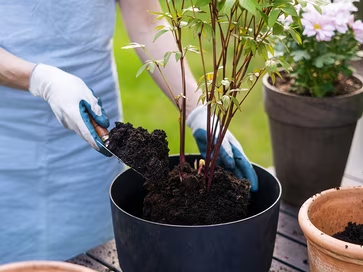
- Dig over the area and mix in Daltons Premium Garden Mix or Garden Time Enriched Garden Mix to improve soil structure and nutrients.
- If staking or using a trellis, set it up before planting to avoid disturbing the roots later.
- Plant at the same level as they were in the bag or container, ensuring roots are covered but not buried too deep.
- Water well after planting to help plants settle in and establish strong roots.
- Apply a layer of Daltons Premium Mulch & Feed around plants.
Growing in Containers
Blueberries:
- Choose a container at least 40–50cm wide and deep, with a capacity of 25–40 litres, to allow roots to develop and support strong fruiting. Ensure the container has adequate drainage holes to prevent waterlogging.
- Fill the container with Daltons Premium Acid Mix, as blueberries thrive in acidic soil.
- Position the plant at the same depth as in its original pot and gently firm the mix around the roots.
- Follow steps four and five above.
Raspberries, Blackberries etc:
1. Choose a 50–60cm wide and deep container with a capacity of at least 30 litres, or use a half wine barrel for ample root space and strong plant establishment. See note above re drainage holes.
2. If staking or using a trellis, set it up before planting to avoid disturbing the roots later.
3. Fill with Garden Time Berry Mix or Daltons Premium Potting Mix or to provide essential nutrients and good drainage.
4. Place the plant at the same depth as in its original pot, gently firming the mix around the roots.
5. Water thoroughly after planting to settle the soil and establish roots.

Fertilising
- Feed plants with Garden Time Fruit & Citrus Fertiliser or Garden Time Berry Fertiliser every 4–6 weeks from late October to Christmas, then again from late February to mid-April for juicy, healthy berries.
- Avoid over-fertilising, as this encourages excess leafy growth at the expense of fruit production.
Watering
- Keep the soil consistently moist but avoid overwatering to prevent fungal diseases.
- Plants need extra watering during the peak growing season in December and January.
- Monitor moisture levels closely to ensure plants don’t dry out – especially those growing in containers.
Pests and Diseases
- Treat raspberry caterpillars with organic Derris Dust or spray plants with Neem Oil.
- Prevent rust and fungal diseases by applying a copper-based spray early in the season.
- A copper spray before flowering helps protect against disease and keeps plants healthy.
General Care and Maintenance
Pruning Raspberries/Blackberries
- At the end of the growing season (April/May), prune berry plants by removing most of the older wood - the canes that have already fruited.
- Tie up young leaders (light green shoots), as these will be your fruiting canes the following year.
- Remove all other old canes, as those older than two years produce little to no fruit.
- Cut spent canes back to ground level each season to encourage strong new growth and improved fruiting. Note: If left unpruned for several years, fruiting can decline significantly.
Pruning Blueberries
- For the first few years, blueberries require little to no pruning. Once established, pruning should focus on removing dead, unhealthy, or overcrowded branches to encourage fresh growth for future crops.
- Lower branches close to the soil should also be removed to improve air circulation and reduce disease risk.
- A light annual prune helps maintain plant health and productivity.