How to Grow Feijoas Guide
Feijoas are a Kiwi institution. Loved for their juicy, sweet flavour, they are easy to grow and thrive in a range of climates. Whether you're planting your first feijoa or looking to improve an existing one, this guide will help you enjoy delicious homegrown fruit for years to come.

Selecting the Right Variety
Feijoas come in a range of varieties, with some being self-fertile and others partially self-fertile which benefit from cross-pollination. With over 15 varieties available, choosing the right one depends on your space, whether you want a single tree or multiple plants for improved fruiting.
Cuttings vs. Seedling-Grown Feijoas
In New Zealand, most named feijoa varieties, such as Apollo, Gemini, Marion, and Unique, are grown from cuttings to ensure consistent fruit quality, size, and reliability. Feijoas can also be grown from seed, but seedling-grown plants (Feijoa sellowiana) often:
- Take longer to produce fruit (up to 5–7 years).
- Produce smaller and less reliable fruit in terms of size and flavour.
Best for Home Gardens: Cutting-grown varieties provide consistent, high-quality fruit.
Best for Ornamental Use: Seedling-grown feijoas are better suited for hedging or ornamental use where fruit quality is not a priority.
Self-Fertile vs. Cross-Pollination
- Self-fertile varieties can produce fruit on their own but planting another variety nearby boosts fruit quantity and size.
- Cross-pollination happens naturally via bees and other pollinators. Planting two or more varieties within 2–5 metres improves fruiting.
- Even partially self-fertile varieties like Apollo and Mammoth produce larger and more abundant fruit when cross-pollinated.
Recommended Self-Fertile Varieties
- Feijoa ‘Unique’ – A reliable, self-fertile option that produces medium-sized fruit early in the season and starts fruiting from a young age.
- Bambina™ – A dwarf, self-fertile variety ideal for smaller gardens or pots.
Feijoa Varieties To Grow
| Variety | Self-Fertile or Cross-Pollination | Flavour | Fruit Type | Planting | Fruiting |
| Apollo | Partially self-fertile, better cross-pollinated with Triumph or Mammoth. | Sweet and aromatic, hint of tang. | Medium to large, oval shaped. | Autumn or spring. | Mid to late season, April to May. |
| Arhart | Requires cross-pollination for good fruiting. | Mildly sweet , balanced acidity. | Medium-sized, smooth skin. | Autumn or spring. | Mid-season, around April. |
| Bambina™ (dwarf) Perfect for smaller gardens or pots | Self-fertilie. | Sweet, slightly tangy, refreshing. | Small, bite-sized, thin skin. | Ideal for spring but can also be planted in autumn. | Early to mid-season, March to April. |
| Den’s Choice | Self-fertile but cross-pollination for larger fruit. | Mild, mellow, hint of spice. | Medium-sized, smooth texture. | Autumn or spring. | Mid to late season, April to May. |
| White or Golden Goose | Can fruit alone, better with cross-pollination. | Exceptionally sweet, fragrant. | Large, round, smooth, golden-yellow skin. | Autumn or spring. | Late season, May to June. |
| Gemini | Produces best with a pollinator like as Apollo or Triumph. | Rich, aromatic, slightly tangy. | Medium-sized, firm texture. | Autumn or spring. | Mid to late season, April to May. |
| Kakapo | Better fruit set and yield with cross-pollination. | Mild, slightly tangy, floral sweetness hint. | Small to medium, smooth skin. | Autumn or spring. | Mid to late season, April to May. |
| Karamea | Cross-pollination required for consistent and larger fruit. | Sweet, subtle citrus undertone. | Large fruit with smooth skin. | Autumn or spring. | Mid-season, around April. |
| Mammoth | Partially self-fertile, better fruit with cross-pollination from Apollo or Triumph. | Sweet, rich, aromatic, slight tang. | Large, oval, thin skin, juicy flesh. | Autumn or spring. | Mid to late season, April to May. |
| Marion | Better fruit and size with cross-pollination. | Sweet, juicy, refreshing aftertaste. | Medium to large, smooth skin. | Autumn or spring. | Mid to late season, April to May. |
| Pounamu | Self-fertile, better fruit with cross-pollination. | Mildly sweet, smooth texture. | Medium-sized, oval-shaped fruit. | Autumn or spring. | Mid to late season, April to May. |
| Triumph | Better fruit and size when cross-pollinated with Apollo or Mammoth nearby. | Slightly tangy, balance of sweetness. | Medium to large, with firm flesh. | Autumn or spring. | Mid to late around April to May. |
| Unique | Fully self-fertile, reliable. | Sweet, smooth, mildly aromatic. | Medium-sized, smooth-skinned fruit. | Autumn or spring. | Early from late March to early April. |
| Wikitu | More fruit and larger size with cross-pollination. | Sweet, fragrant, smooth texture. | Medium to large, smooth skin. | Autumn or spring. | Late season, May to June. |

Planting Feijoas
Prime Planting Time
Feijoas can be planted in autumn or spring, depending on where you garden in New Zealand.
- Warmer and milder areas: Plant in autumn to early winter, while there is still some warmth in the soil and plants have time to establish before dry summer weather.
- Cooler or frost-prone areas: Plant in spring, once the soil begins to warm and the risk of hard frosts has passed.
Planting in the Garden
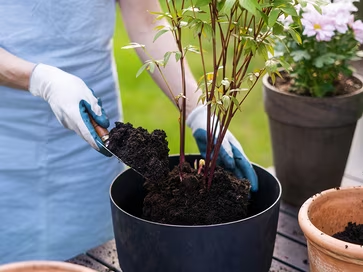
- Dig a hole twice as wide and as deep as the container.
- Mix Garden Time Compost and Daltons Premium Garden Mix into the hole.
- Add Garden Time Chicken & Sheep Pellets and Daltons Premium Planter Tabs for slow-release nutrients.
- Create a mound at the bottom where the tree’s root ball will sit.
- Place the tree in the hole, backfill with soil, and gently firm it down.
- Ensure the tree sits slightly higher than ground level to prevent water pooling and root rot.
- Water thoroughly after planting and apply Daltons Premium Mulch & Grow to retain moisture and suppress weeds.
Growing in Containers
If space is limited, Bambina™ is the best variety for pots due to its compact size.
- Use a high-quality mix such as Daltons Premium Potting Mix for consistent nutrients and drainage.
- Potted plants require more frequent watering, especially in hot summer months.
- Feed regularly using the guidelines below to keep your potted feijoa healthy and productive.
Fruiting and Extending the Season
Feijoas will take a number of years before they start fruiting regularly and in significant numbers - this may be three to five years after planting.
- Most varieties fruit around April, but early varieties can begin in March, and late varieties can continue through to May.
- To extend your feijoa season, plant a mid-to-late fruiting variety like Mammoth or Apollo for a longer harvest.
Fertilising
Apply Daltons Garden Time™ Fruit & Citrus Fertiliser in late summer to early autumn and again in spring to early summer to support healthy growth and fruiting.
Watering
- Water well over dry summer months when the plants are young to encourage strong vigorous growth.
- For potted trees, monitor moisture levels closely to ensure plants don’t dry out.
Harvesting
- Ripe feijoas are now ready to be collected from the ground - never pick a feijoa from the tree! The best fruit naturally drops when perfectly ripe.
- Check under the tree daily to gather fallen fruit, especially after wind or rain.
- Once collected, feijoas can be stored in the fridge for a few days, but for longer storage, consider freezing the pulp or making delicious jams, chutneys, or smoothies.

General Care and Maintenance
Pruning
- You can lightly prune feijoas after harvesting, ideally late autumn to early winter (May to July). This is because feijoas flower very early - months before they set fruit.
- Remove dead, damaged, or crossing branches to improve airflow and reduce disease risk. Avoid heavy pruning, as feijoas flower on new season’s growth.
- Named varieties like Apollo, Gemini, and Wikitu are cutting-grown with an open growth habit, requiring only light pruning to maintain shape and encourage fruiting.
- Modern feijoas need minimal pruning, mainly to maintain a manageable height, as they can still grow up to 3–4 metres if left unchecked.
Mulching
Keep the area around the base of the tree weed-free to reduce competition for nutrients and water. Add a thick layer of Daltons Premium Mulch & Grow or organic mulch around the base to retain moisture, suppress weeds, and regulate soil temperature.
Pests and Diseases
- Keep an eye out for guava moth, scale, and mealybugs.
- Treat infestations early with an appropriate insecticide or organic spray.
More Helpful Information
Read our range of Feijoa Q&A’s to answer common questions and give you even more helpful tips.