How to Grow Bulbs Guide
Bulbs (and corms) are one of the easiest ways to add seasonal colour. This guide covers when to plant bulbs in NZ, what to plant by month, and the simple steps for planting in garden beds or pots, including depth, spacing and aftercare.
Daltons Premium Bulb Mix and Daltons Premium Bulb Fertiliser are specially formulated to help your bulbs thrive and can be used in the garden or containers.
Bulbs, corms and tubers – what’s the difference?
- Bulb: a layered “storage” plant (like an onion) that holds food to power next season’s growth (e.g., tulips, daffodils).
- Corm: a solid, rounded storage stem (no layers) that sprouts again each year (e.g., crocuses, gladioli).
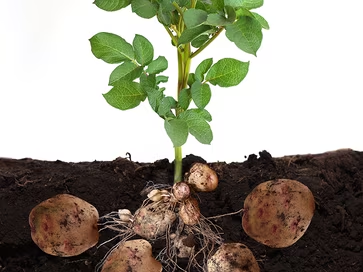
- Tuber: a swollen storage root or stem that stores energy and grows new shoots from buds (e.g., begonias, dahlias).
Selecting the Best Bulbs
Start by picking healthy, well-sized bulbs and make sure to buy them early in the season when there is a wide selection.
- Inspect the bulbs thoroughly. If they're packaged in groups, do your best to examine each one.
- Steer clear of any bulbs that feel soft, appear too small, are shrivelled, or show signs of discolouration.

Bulb Varieties & Planting Times
A few well-chosen bulbs can give you months of colour. Many are perennials, so they’ll return year after year with very little fuss and are a cost-effective choice for long-term gardening..
- Always check the packet label before planting, timing can vary by variety and by region.
- For the best display, plant bulbs in clumps and feel free to mix and plant different bulbs together to give lovely variations in height and colour.
- Tulips need winter cold to perform well. In milder/warmer parts of New Zealand (e.g. Auckland), they are less likely to flower well, so are commonly treated as annuals and replanted each season.
Autumn planting (NZ): bulbs and corms for winter and spring flowering:
| Month: | Varieties: | Notes (NZ Conditions): |
| Feb | Anemone (corm), Babiana (corm), Crocus (corm), Daffodil (bulb), Freesia (corm), Hyacinth (bulb), Iris (bulb), Ixia (corm), Jonquil (bulb), Muscari (bulb), Tulip (bulb). | Buy early for best range. |
| Mar | Anemone (corm), Babiana (corm), Crocus (corm), Freesia (corm), Hyacinth (bulb), Iris (bulb), Jonquil (bulb), Lachenalia (bulb), Muscari (bulb), Ranunculus (tuber), Tulip (bulb) | See note above re tulips.
|
| April | Babiana (corm), Daffodil (bulb), Ixia (corm), Iris (bulb), Ranunculus (tuber), Tulip (bulb), Watsonia (corm) | Final month for successful bulb planting. |
Spring planting (NZ): bulbs, corms and tubers for summer colour:
| Month: | Varieties: | Notes (NZ Conditions): |
| Sept | Begonia (tuber), Gloxinia (tuber) | Start under cover in cooler or frost-prone areas. |
| Oct | Amaryllis (bulb), Begonia (tuber), Calla (rhizome), Dahlia (tuber), Gladiolus (corm), Gloxinia (tuber), Nerine (bulb). |
|
| Nov | Calla (rhizome), Dahlia (tuber), Gladiolus (corm) | Fine to continue planting in many areas. |
Planting Bulbs in the Garden
Choose where you are going to plant in the garden – the ideal spot gets plenty of sun and has soil that drains well.
- Prepare the site by removing weeds, particularly any perennial weeds which can make it difficult for bulbs to push up through.
- Cultivate a wide area to a depth of no greater than 10cm. Prepare the soil by thoroughly mixing in generous amounts of Daltons Premium Bulb Mix and Daltons Premium Garden Mix.
- Plant bulbs with the pointed end up, and twice as deep as the length of the bulb, and cover with soil. Make sure you plant them 10-15cm apart to give enough room for growth.
- After planting, water them well and add a layer of Daltons Premium Mulch & Feed on the surface of the mix to improve moisture retention.
- It’s important to mark where your bulbs are planted in the garden, so you don’t accidentally disturb or dig them up when they’re dormant over winter.
Growing Bulbs in Pots
The beauty of growing bulbs in pots is that they are portable. You can keep them at the bottom of the garden over winter, and transport them back to your porch or indoors when they begin flowering.
Every 3-5 years you will need to refresh the soil in pots; remove and check the bulbs, break up the bigger bulbs, and where necessary throw away any misshapen, damaged, rotten or old bulbs and replace them with new ones.
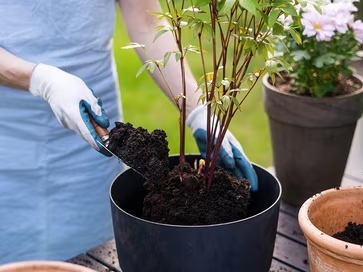
- Fill your container with Daltons Premium Bulb Mix leaving at least 3cm at the top of the container for ease of watering.
- Place each bulb with the pointed end up to a depth of twice its own length under the surface and space then 2-3cm apart.
- Make sure the bulbs are covered and the mix is firmly pressed down in the container.
- Water thoroughly and allow to drain.
- Apply a layer of Daltons Premium Mulch & Feed on the surface of the mix to improve moisture retention.


Quick Guide
- Which way up? Pointy end up.
- How deep? About 2–3 times the bulb height (or roughly twice the bulb length, depending on bulb shape).
- How far apart? Around 10–15cm apart in garden beds.
Planting over Bulbs
Maximise your garden space and enjoy flowers all year round by planting winter annuals/potted colour on top of your bulbs. This keeps your garden vibrant and cheerful during the colder months. As the bulbs quietly develop underground, the winter plants will complete their cycle just in time for the spring bulb shoots to pop through the soil.
Read our How to Grow Flowers for Garden Colour guide for suggestions on what to grow.
After Flowering
At the end of the season once the flowers have finished, allow the leaves to brown and die down naturally to protect the plant and ensure maximum nutrients have been stored in the bulbs for the next season's flowering.
Cutting off the leaves prematurely is a common mistake that can significantly impact the quantity of flowers in the following season.
You can leave the bulbs in the ground for next season (see below), or dig the bulb out and store them in a cool dry place until next autumn.
In warmer areas such as Auckland, tulips are best treated as annuals. Remove them after flowering and plant fresh bulbs next season.
Lifting Bulbs
In general, bulbs can be left in the ground for several years before it impacts their flowering. You can take bulbs out and dry them over the season although there is no real advantage in doing this unless you want to move their position.
- If you would like your bulbs to naturalise (spread naturally on their own) just leave them in the ground and do not disturb them. However, with some varieties, particularly Irises and Lachenalias it is essential to lift them every 2-3 years otherwise their flowering will reduce.
- If your bulbs are growing in containers or smaller areas, it is best to lift, check and replant them every three to four years. Simply dig up the bulbs, check their condition and remove any that are diseased or rotten. Divide them if need be (some may have multiplied) and plant them out again in the ground or back into containers with fresh Premium Bulb Mix.
At the end of the season (once the flowers have finished), the foliage (leaves) begins to brown and die down. Some people cut this foliage off too early and it is a major reason for reduced flower numbers next season. Leave them to brown and die down naturally to protect the plant and ensure maximum nutrients have been stored in the bulbs for the next season's flowering.


Feeding and watering
Bulbs are remarkably self-sustaining and do not need any special watering, but in the event of a severe drought, give bulbs a thorough soaking once a week. If you experience severe flooding lift your bulbs if possible to reduce the risk of rot.
Fertilising Bulbs
When green foliage (leaves) starts to push through the soil, feed your bulbs by applying Daltons Premium Bulb Fertiliser – this also applies to bulbs grown in pots. Dig the fertiliser in lightly and always water it in well. This will promote healthy, vigorous blooms.
After your bulbs have finished flowering, apply Daltons Premium Bulb Fertiliser once again to support them in bulking up their stores for next season.
Pests and diseases
Bulbs in general are typically free of pests and diseases. However when buying, always check them carefully for any rotten, misshapen or soft bulbs. If you dig up your bulbs or re-pot, discard any diseased or soft bulbs.
If you are experiencing issues with bulbs in your garden, such as no flowers etc, our helpful Q&A's provide helpful advice and solutions.