How to Grow Dahlias
Dahlias are one of the easiest flowers to grow and perfect for any garden space regardless of size. There are so many stunning varieties available, once you start growing dahlias, you may find it hard to stop!
Read our step-by-step guide for a stunning dahlia filled garden.
Selecting the Right Variety
Dahlias tubers are the most common way to grow dahlias and are available at your local garden centre or via nurseries online. They can also be grown from seed or cuttings. In this guide we focus on growing from tubers.
What to look for:
- Always select healthy-looking tubers and avoid any that show signs of disease or rotting.
- Viable tubers will sprout “eyes” – this is a great sign and means that the tuber is ready for planting.
Varieties to grow:
There are literally hundreds of dahlia varieties available in a range of shapes, sizes, and colours, including pompons, anemones, cactus blooms, single petals, and collarettes.
Some of our favourites include:
- ‘Café au Lait’
- ‘Copper Boy’
- ‘Wizard of Oz'
- 'Edinburgh’
- 'Bishop of Llandaff'
- 'Sweet Nathalie'
- ‘Peaches n Cream'
- 'Linda's Baby'
- 'Labyrinth'
- 'White Star'


Ideal Planting Conditions (soil, site, sun, etc)
- Dahlias thrive in full sun, so pick a sunny spot with at least 4 hours of sunlight daily – the more sun, the more flowers!
- Prepare your soil before planting. Ensuring it is free draining and nutrient rich – a must for dahlias.
Prime Planting Time
Labour weekend is the traditional weekend in New Zealand to get your dahlia tubers in the ground although you can plant from early October, right up till the end of November. Ensuring frosts and most of the wet spring weather are behind us.
How to Plant Tubers in the Garden
Dahlias are gross feeders, and well-prepared soil will provide the nutrients they need over the growing season. It is essential to prepare your soil well each year before planting.
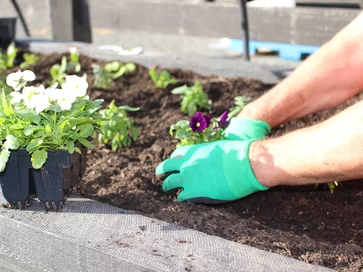
- Prepare your soil well by mixing in Daltons Garden Time Compost and Daltons Premium Garden Mix with your existing soil.
- Dig a hole and sprinkle in a good handful of Daltons Premium Bulb Mix.
- Place tuber upright in the centre.
- Most varieties need to be staked, so add one in now so not to disturb later.
- Fill with more Daltons Premium Bulb Mix and existing soil.
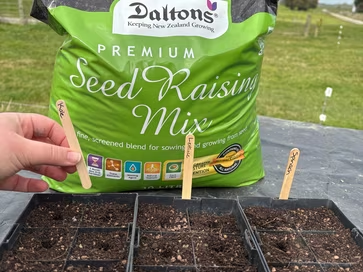
- Mark the variety with a name tag – a must do!
- Once planted water in well with Daltons Garden Time Seafeed.
How to Grow Tubers in Containers
Ideal for those short on space, dahlias can be successfully grown in pots or containers.
Before you start, ensure your pot is at least 30 litres in size and has adequate drainage.
- Fill your pot about ¾ with Garden Time Potting Mix, then top up with Daltons Premium Bulb Mix.
- Make a hole and place your tuber upright in the centre.
- Most varieties need to be staked so add one in now, so you don’t disturb the tuber later on.
- Sprinkle over more Daltons Premium Bulb Mix and ensure the tuber is well covered.
- Place in a sunny spot with at least 4 hours of sunlight per day.
Watering
Give your dahlias the best start with Daltons Garden Time Seafeed plus NPK – it’s liquid gold for the garden, made from NZ natural seaweed sustainable sourced from Marlborough.
- Add Garden Time Seafeed into a watering can as per the application rates on the bottle, mix well and apply to your plants – you can also use it as a foliar spray. For best results reapply every 7-10 days.
- Before shoots appear do not over water as this may cause the tuber to rot.
- Once foliage appears, water dahlias regularly and deeply over the growing season.
Daltons Top Tip: Apply Seafeed to your dahlias 2-3 days before cutting to lengthen life.
General Care and Maintenance
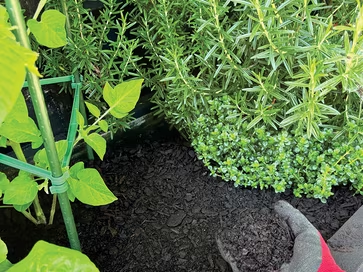
Mulch your dahlia plants when they are around 15cm high to help suppress weeds and keep the soil cool and moist over the summer months. Explore our range of bagged mulch and bark products. Leave some space around the base of the plant and reapply as necessary throughout the growing season.
Encouraging more blooms
Pinch out your dahlias to encourage more shoots, which will provide more flowers. You can only ‘pinch’ each plant once in the growing season. Follow our easy steps:
- Ensure your plants have 2-4 sets of leaves on the stalk.
- Find the top shoot on the stem between the two leaves and cut it off with your pruners – this allows two shoots to grow instead of one.

Lifting and Storing Dahlia Tubers
If you live in areas that are prone to frost and rain you might want to lift your dahlia tubers so they don’t rot, or you might simply want to move them to a new spot in the garden for next season. Otherwise, dahlia tubers can be happily left in the ground for a couple of years.
To lift your tubers:
- Trim down stems and remove foliage.
- Write name of variety on tagging tape and tie to remaining stem.
- Gently agitate the soil around your dahlia with a spade leaving plenty of space. Be careful - if you put the spade too close it can cut straight through your tuber.
- Gently lift tuber out.
- Wash the tuber to remove dirt and soil and allow to dry.
- Place tubers in cardboard boxes or containers lined with pea straw, shredded newspaper, or vermiculite.
- Store in a cool dry place for winter.
Dividing Dahlia Tubers
Dividing clumps of dahlia tubers will increase the number of plants you have. It's best to wait until spring to do this as visible eyes can be hard to identify directly after lifting and washing, but much easier after storing over winter.
There are three parts of a dahlia tuber; the tuber itself, the neck (middle part that connects the crown to the tuber), and the crown (top part where the eye comes from). Always work with sharp snips and a knife that are clean and sanitised.
- Clean up your clump by cutting away any rotten tubers or ones with broken necks as these will not grow.
- Depending on the size of your dahlia clump, it's best to divide the clump in half and if necessary, cut each half in half again so you have a more manageable size to work with.
- Start at the top of the clump and cut away viable tubers (ones with all three parts and a visible eye) from the crown until you have worked your way through the clump.
- If you can't identify eyes, your tuber will likely not grow, however, these tubers can be stored and rechecked at a later time to see if any eyes have formed.
- Name and store viable tubers until ready to plant out.
When it comes to dahlia tubers, size does not matter. Even the smallest tubers with an eye can grow and produce the most beautiful blooms. Plus, a single tuber will grow and form its own clump of tubers after just one growing season.
Pests and Diseases
Powdery Mildew
Powdery mildew is a common fungal disease that thrives in the humid late summer months showing up as greyish/white powdery coating on leaves.
Remove affected leaves to increase airflow and dispose of them away from your property. While it may hinder the plant from thriving, it will not affect your tuber.

Earwigs
Earwigs like to nibble on dahlia leaves and petals, especially when the flowers buds are forming. Being nocturnal, earwigs like to hide in damp dark areas.
They’re not normally an issue in the home garden and play an important role in its ecosystem, but there are a few ways to discourage them from eating your dahlias.
Homemade bamboo stake traps:
- Poke thick bamboo stakes into the ground at night next to your plant (careful not to damage the tuber). Earwigs will hide in here during the day.
- In the morning, pull them up gently and tap the earwigs out in a location far away from your dahlias.
Garden hose traps:
- Cut up an old hose into pieces.
- Slide in some small pieces of twigs or foliage.
- Tuck them in beside your dahlia plants.
- Remove as per step 2 in the bamboo trap.
Alternatively, talk to your local garden centre about commercial traps.
Neem Oil
Spray plants with neem oil or sprinkle neem granules on the soil around the plant.