How to Grow Blueberries
Fresh blueberries straight from the garden are something else entirely. Sweet, juicy, and packed with goodness, they're also surprisingly straightforward to grow once you understand a few key things about what they need.
Blueberries are a long-term investment. Treat them well in the early years and a healthy, established plant will reward you with generous crops every summer for a decade or more.
There's one non-negotiable: blueberries are acid-loving plants. Get the soil chemistry right and the rest largely looks after itself.
At a Glance
| Position | Full sun, sheltered from wind |
| Soil pH | 4.5 to 5.5 (acidic is essential) |
| When to plant | May to September |
| How many to buy | Two or more varieties for best cross-pollination and heavier crops |
| Harvest | December to March, depending on variety |
| In pots | Yes, with the right acid mix |
Choosing the Right Variety
New Zealand garden centres generally stock two main types of blueberry: highbush and rabbiteye.
- Highbush varieties like Bluecrop, Duke, and Legacy tend to do well across most of New Zealand.
- Rabbiteye types such as Tifblue and Climax handle warmer, drier conditions better and are worth considering if you're in a hot northern region.
Pairing
The most important thing when buying blueberries is to get at least two different varieties.
Blueberries produce much heavier crops when they cross-pollinate with another variety flowering at the same time.
A single plant will fruit, but two plants of compatible varieties will fruit significantly better.
Good pairings to look for:
- Bluecrop and Legacy (highbush, good for most of NZ)
- Misty and Marimba (suit warmer North Island conditions)
- Climax and Tifblue (rabbiteye types, heat tolerant)
Where to Plant
Blueberries want a warm, sunny spot with shelter from strong winds.
They need at least six hours of direct sun each day to fruit well. Don't tuck them away in a shaded corner.
Blueberries grow as attractive bushy shrubs reaching around 1 to 1.5 metres tall, so they work well as an edible hedge or as a feature in a sunny border.
- Plant them about a metre apart if you're growing several together.
- Avoid low-lying spots where frost settles or water pools after rain. Good drainage is essential.
- Most berry plants grow best in the cooler regions of New Zealand, but blueberries are reasonably adaptable across the country as long as they get enough sun and the soil pH is right.


Soil Preparation and Planting
This is the most important step. Blueberries need acidic soil, ideally pH 4.5 to 5.5. In most New Zealand garden soils (typically pH 6.0 to 7.0) blueberry plants struggle to absorb iron and other nutrients, which leads to yellowing leaves and poor fruiting regardless of how much you water and feed them.
The main planting season runs from May through to September. This gives plants time to establish their root system over winter before they're called on to put energy into fruiting.
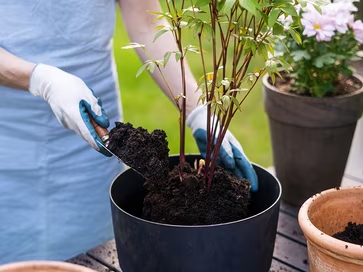
Planting in Garden Beds
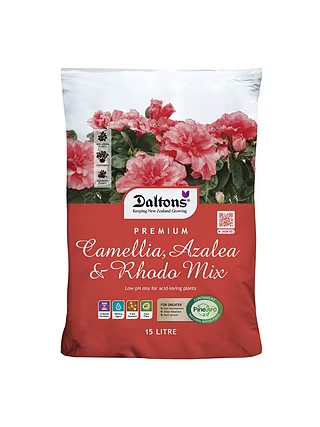
- Dig over the planting area deeply and mix in Daltons Premium Camellia Azalea & Rhodo Mix to bring the soil pH into the right range. If your soil is heavy or poorly draining, also work in Daltons Premium Garden Mix to improve structure.
- Dig a hole twice the width of the container the plant came in.
- Place the plant at the same depth it was growing in its pot, or very slightly higher, so the crown sits just above ground level. This prevents water pooling around the base.
- Firm the mix in around the roots and water in well.
- Mulch around the base with Daltons Premium Mulch & Feed, keeping it away from the main stem. Blueberries have shallow roots that don't appreciate drying out, and a good layer of mulch makes a real difference over summer.
Growing in Containers
Blueberries do very well in containers, which also makes managing soil pH much easier since you're in full control of the growing medium.
- Choose a container at least 50 to 60cm wide with a capacity of at least 30 litres. A half wine barrel is a great option. Make sure there are drainage holes.
- Fill with Daltons Premium Camellia Azalea & Rhodo Mix. This gives your blueberry the acidic environment it needs from day one. Avoid standard potting mixes, which are usually too alkaline for blueberries.
- Plant at the same depth as the original pot, gently firming the mix around the roots.
- Water in thoroughly after planting.
Tip: If a pot-grown blueberry has produced well for a season or two then stops, it's likely become root-bound or is drying out too quickly. Repot into a larger container with fresh Daltons Premium Camellia Azalea & Rhodo Mix and keep on top of watering.
Feeding
- Start feeding in late October once new growth is underway and continue through to Christmas. Feed again from late February to mid-April as the plant recovers and puts on growth for the following season.
- Use Daltons Premium Berry Fertiliser or Garden Time Berry Fertiliser every four to six weeks during these periods. These are formulated for berry plants and contain the right balance of nutrients for good fruiting.
- Don't be tempted to overfeed. Too much nitrogen encourages leafy growth at the expense of fruit. Stick to the label rates and the recommended feeding windows.
Pruning
In the first two or three years, very little pruning is needed. The plant is busy establishing, and you want to encourage a good framework of branches.
Once established, prune in late winter (July to August) before new growth begins. The aim is to remove old, unproductive wood and encourage fresh shoots that will carry next season's fruit.
Blueberries don't need the hard pruning that raspberries do. You're after a well-aired, open bush with plenty of newer growth.
Each year:
- Remove any dead, diseased, or damaged branches
- Take out branches that cross through the centre or rub against others
- Remove lower branches that trail close to the ground
- Every few years, cut out the oldest, thickest stems at the base to keep younger, more productive wood coming through
Watering
Consistent watering matters, especially once flowering starts. If blueberries get stressed by dry conditions when flowers and young berries are forming, they'll drop them. This is one of the most common reasons for a plant that flowers well but produces little fruit.
- During the growing season, water deeply two to three times a week rather than a light daily sprinkle. Keep that mulch topped up to help hold moisture in the soil.
- Pot-grown plants will need more frequent attention, particularly in hot nor'westerly spells.
- Just as important: don't let plants sit in waterlogged conditions. If a container doesn't drain freely or is sitting in a saucer of standing water, root rot can follow quickly. Raise containers off the ground on pot feet so water drains away freely.
Harvesting
Depending on variety and your part of New Zealand, harvest runs from December through to March.
Don't be in a rush to pick as soon as berries turn blue. Give them another few days after they colour up fully. A ripe blueberry comes away easily with a gentle twist and has a deep blue colour with a natural silvery bloom on the skin.
Fresh blueberries keep well in the fridge for up to a week.
They also freeze beautifully: spread them on a tray to freeze individually first, then transfer to a bag or container.

Pests and Common Problems
Birds
By far the biggest issue with blueberries in New Zealand gardens. Once berries start to colour up, you'll be in competition with every silvereye in the neighbourhood. Get bird netting over the plant before fruit starts to ripen.
Yellowing leaves
If your blueberry's leaves are yellowing between the veins (called chlorosis), the soil pH is almost certainly too high. The plant can't take up iron and other trace elements properly. Test your soil pH and work in more Daltons Premium Camellia Azalea & Rhodo Mix, or use an acidifying fertiliser to bring it back into range.
Good flowers, little fruit
Two likely causes: insufficient cross-pollination (plant a second compatible variety), or inconsistent watering during fruit set. Both are fixable.
Leaf drop or a stressed-looking plant
Blueberries drop leaves quickly if they've been waterlogged or dried out severely. Check whether the plant has been sitting in wet conditions or has dried right out. Remove any fruit so the plant can focus its energy on recovery rather than cropping. Water regularly and adjust drainage as needed.
Quick Questions
How long before a blueberry plant produces fruit?
Expect light fruiting from the second or third year. Production picks up significantly from year three or four as the plant matures. A well-established blueberry is a long-term proposition and well worth the wait.
Can I grow blueberries in a pot?
Yes, blueberries are well suited to container growing. Use a large container (at least 30 litres), fill with Daltons Premium Camellia Azalea & Rhodo Mix, and keep on top of watering and feeding. Repot every few years as the plant grows.
Do I need more than one blueberry plant?
Technically a single plant will produce some fruit, but two or more varieties that flower at the same time will cross-pollinate and produce noticeably heavier crops. It's worth planting at least two.
Why are my blueberry leaves turning yellow?
Most likely a soil pH problem. Blueberries need acidic conditions to absorb nutrients properly. If the pH is too high, the plant shows chlorosis (yellowing between the leaf veins) even when fertilised regularly. Test and correct the pH first.
When should I plant blueberries in New Zealand?
The main planting season is May through September. This gives plants a full winter to settle in before the growing season begins. You can plant outside this window, but you'll need to water consistently through the first summer.
What soil do blueberries need?
Well-drained, acidic soil with a pH of 4.5 to 5.5. In most New Zealand garden soils you'll need to lower the pH by mixing in Daltons Premium Camellia Azalea & Rhodo Mix. In pots, use Daltons Premium Camellia Azalea & Rhodo Mix as your base growing medium.