How To Grow Avocados At Home
Growing avocados requires patience, but the reward is worth it. Their lush, evergreen foliage adds beauty to a garden, and the promise of delicious, home-grown fruit makes the effort even more rewarding.
In this guide, you’ll learn how to select the right variety, planting tips, and guidance on fruiting, watering, and protecting your avocado tree from pests and frost.
Selecting the Right Variety
- Opt for grafted, named varieties like Hass, known for reliable fruit production. Hass avocados are a popular choice, making up 75% of the world’s avocado production.
- Hass trees are generally self-fertile, meaning they can produce fruit on their own. However, varieties like Reed, Bacon, and Fuerte produce more heavily when grown alongside other varieties.
- Seedlings grown from supermarket avocados often grow into large trees but may never bear fruit.
Ideal Planting Conditions
Soil
- Well-draining soil is the most critical factor for avocado growth.
- Avoid heavy clay soils that retain water, as they can lead to root rot.
- Improve your soil by mixing in organic matter like Garden Time Compost to enhance drainage and fertility.
Site and Sun
- Avocados thrive in full sun, sheltered spots. They struggle in windy areas or regions prone to heavy frost.
- For best results, plant in full sun and protect young trees from strong winds and frost.
Shelter
- Stake young trees for support. Prepare the soil first, add your stake, then plant the avocado tree; this way you won’t damage the roots. Position the stake against prevailing winds to guide the tree’s growth.
- Consider building a simple structure using battens and shade netting to shield the tree during its early growth stages.
Prime Planting Time
- Plant avocado trees in spring or early summer (late September to November). This ensures the soil is warm and dry enough and helps the tree establish a good root system.
- Handle young avocado trees gently during planting, ensuring the root ball stays intact to avoid damaging delicate roots.
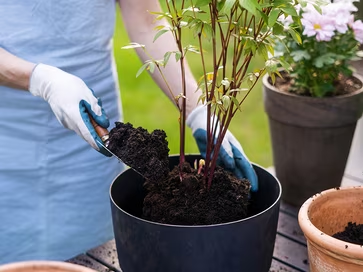
Planting in the Garden
- Soak the tree in Garden Time™ Seafeed Plus NPK to reduce transplant shock.
- Dig a hole twice as wide as the container, 12 cm deeper for PB10 bags.
- Mix Garden Time Compost and Daltons Premium Garden Mix into the soil.
- Place a stake in the hole to avoid damaging roots later.
- Form a mound in the hole for the root ball.
- Position the tree on the mound, backfill, and compact gently.
- Keep the tree base slightly above ground level to prevent water pooling.
- Water well and add Daltons Premium Mulch & Feed to retain moisture and suppress weeds.
Flowering and Fruiting
- Expect your avocado tree to start producing good, consistent crops around five years after planting.
- Remove developing fruit in the first few years to help the tree focus on establishing a strong framework. Think of it as an investment in the future!
Alternate Cropping
- Avocados can exhibit alternate cropping, where a heavy yield one year is followed by a lighter yield the next. As trees mature and are regularly pruned, cropping should become more consistent.
Flowering and Harvesting
- In spring, small yellow-green flowers appear en masse. Fruit forms and matures over summer, with harvesting typically occurring from February through into autumn.
Fertilising & Watering Avocado Trees
- Feed with Daltons Premium Fruit & Citrus Fertiliser in early spring and late summer.
- Water regularly, especially during the first few years. Keep the soil consistently moist but not waterlogged.
- Add mulch around the base to retain moisture and keep weeds at bay. Explore our range of bagged mulch and bark products.
Image

Common Pests
Regular inspection and prompt treatment will help keep your avocado tree healthy.
- Thrips are small insects can damage leaves and fruit. Regular monitoring and applying sprays can help keep them under control.
- Scale insects attach themselves to branches and leaves, weakening the tree. Treat with horticultural oil.
Common Diseases
- Root Rot (Phytophthora): This is the most serious threat to avocado trees, often caused by poorly draining soil. To prevent root rot, ensure proper drainage and avoid overwatering. If detected, use a fungicide recommended for Phytophthora.
- Anthracnose: This fungal disease causes black spots on fruit and leaves. Prune affected areas and apply a fungicide as needed.
- Sooty Mould: Often a result of sap-sucking insects like scale or aphids. Treat the insect issue first, and the mould will usually clear up.
General Care and Maintenance
Pruning
- Prune trees to maintain a manageable height of 3-4 meters, making fruit more accessible.
- Perform pruning after summer harvesting to ensure cuts dry out before winter.
By following these tips, you’ll set your avocado tree up for success and enjoy the fruits of your labour for years to come.