Treating & Preventing Powdery Mildew
What's the best way to Treat and prevent powdery mildew?
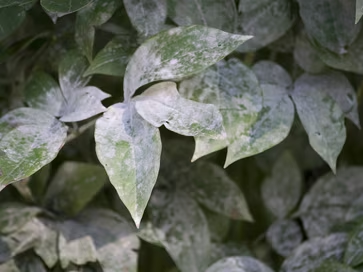
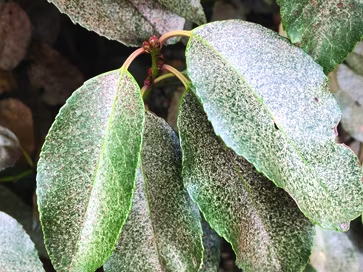
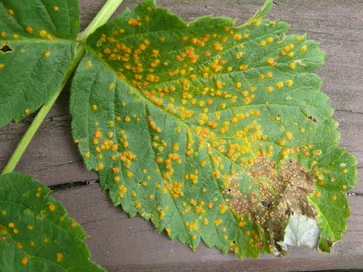
Powdery mildew is a common fungal disease that appears as a greyish-white, powdery coating on plant leaves. Infected plants often experience leaf edges dying back, which can weaken their overall health. It affects a range of plants including dahlias, courgettes, cucumbers, sweet peas, roses, calendular and vine crops.
Treating Powdery Mildew If It Appears
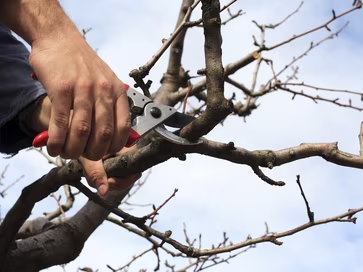
- Remove affected leaves: Cut off badly affected leaves as soon as you spot them to help slow the spread. Dispose of them in the rubbish, not the compost, and clean tools between cuts.
- Spray Early: To prevent powdery mildew, regularly spray with a copper compound. Ideally, it is best used just before the plant matures and before the powdery mildew has arrived but do treat it when you spot it.
- Water Wisely: Keep your plants well-watered as dry, heat-stressed plants are more susceptible to disease.
- Don't Water Leaves: Remember to water at the base of the plant and avoid getting water on the leaves.
- Feed for Strength: Feed your plants with Garden Time Seafeed to improve plant resistance to stress from drought, heat, frost and disease.
Preventing Powdery Mildew
While there is no simple solution to completely prevent powdery mildew, home gardeners can take steps to reduce its impact:
- Start with garden hygiene: In spring, remove any leaves or branches where powdery mildew may have overwintered.
- Apply early-season protection: Spray susceptible plants with a copper-based compound early in the growing season to create a protective barrier against the fungus.
- Choose the right location: Establish your garden in an open, sunny area with excellent air circulation. Powdery mildew thrives in damp, shaded, and sheltered spots.
- Maintain plant health: Water and fertilise regularly to keep plants strong, particularly those prone to mildew. Healthy plants are better equipped to resist infection.
- Break the cycle: If powdery mildew is a recurring issue, avoid growing the most affected plants for at least three years to interrupt the cycle of reinfection.