Treating codling moths in apple trees
I have a beautiful apple tree which has given us and our neighbourhood a wonderful supply of apples. But this year it has become riddled with apple moths. What should we do and when to take action?
Codling moth larvae tunnel into apples, leaving brown, crumbly residue and internal fruit damage, but removing fallen fruit, winter clean-up and spring pheromone traps will help reduce the problem.
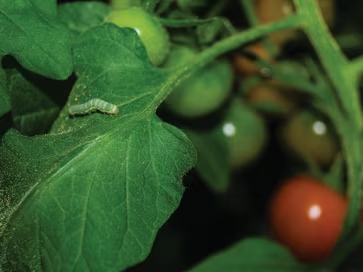
The caterpillar of the codling moth can be very damaging on apple trees. The grey-brown moth lays its eggs on or near small fruit. When the larvae hatch, they tunnel into the apple and feed inside, pushing out a distinctive brown, crumbly residue. They then leave the fruit to pupate (turn from a caterpillar into a moth), often leaving marks behind. There can be up to three generations in one year, so damage can build up quickly.
After harvest clean-up
Carefully remove all fallen and infectected fruit at the end of the season, as this is often where larvae are living and will carry through to the next generation if left on the ground.
Winter spray
When trees are dormant, spray with lime sulphur, which is an excellent clean up spray for insects and various diseases.
Late winter tidy-up
At the end of winter, remove any loose bark from the tree as this can harbour cocoons where caterpillars are pupating.
Spring to autumn control
Hang a codling moth pheromone trap in the tree from September to March, when codling moth is most active. These traps attract the male moth, helping reduce breeding and the number of hatching caterpillars.