Summer Crop Management
Forecasts suggest that most of the country can expect a hot, dry summer ahead. It is crucial for all nurseries to make arrangements in advance and prepare for potential drought conditions. When bracing for drought, taking early steps and assessing all possible courses of action is vital to establish a comprehensive plan. Continuous review and adjustment of practices throughout the season is essential for managing the weather conditions effectively.
Follow our 5 Step Proactive Plan below to prepare for a potential hot, dry summer.


Maintain your irrigation system's efficiency by regularly inspecting operating pressures, flow, filters, and emitters for blockages and leaks, promptly addressing any issues to prevent crop damage. To optimise water use, adjust irrigation schedules daily. Group plants with similar water requirements together in the nursery for easier and more efficient irrigation management. Be mindful of water loss between containers. Consider capturing and recycling this water.
Ensure uniform water distribution in your irrigation layout and make adjustments based on plant needs, water availability, and weather conditions. An effectively designed overhead sprinkler system should evenly distribute water at a rate that matches the soil's absorption capacity.
A 'square grid pattern' for your sprinkler placement enables each plant container to receive water from four sprinklers. For high wind sites, larger droplets and stream rotator distribution sprinklers tend to perform better.
Read more about Sprinkler Selection and Layout

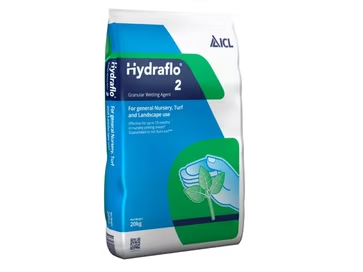
Ensure that your growing media contains a wetting agent, such as Hydraflo. Hydraflo encourages re-wetting in dry conditions, reducing dry spots in the mix and allowing water to uniformly flow through the media.
Monitor the moisture content of each mix below the surface, in multiple different locations around the nursery.
Choose a mix with good water retention properties. These usually have fibrous materials such as Bark Fibre and Pinegro Engineered Wood Fibre.


El Niño has officially arrived, with a 100% chance of continuation from October through December and over 95% likelihood of persisting through summer, bringing temperature fluctuations, altered rainfall patterns, and the possibility of prolonged dry spells in certain regions.
Inform all staff that a hot, dry summer has been forecasted, and of the potential effects of a drought on the nursery. Ensure that all staff are aware of any changes to management practices over summer, including water availability management and monitoring the irrigation system for maximum efficiency.
Read more about Managing Crops During Drought


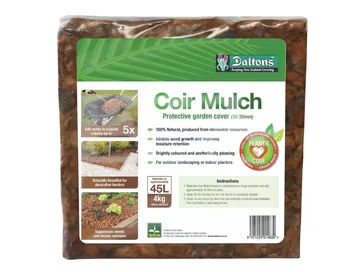
Applying a mulch layer to all pots encourages water retention and keeps the media cool during summer, reducing irrigation. Mulching also suppresses weed growth to reduce competition.
Learn more about Daltons Garden Mulch.


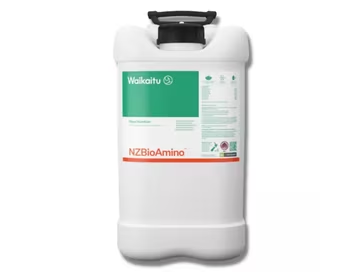
Regular seaweed application prior to drought conditions can improve plant resilience and reduce the effects of stressors such as heat. Resistance to drought conditions is provided through amino acids and bioactive compounds naturally found in seaweed.
Learn more about Daltons Seaweed Products

When potting mix in containers becomes dry, the plant roots are more susceptible to stress as a direct result of significant temperature changes. Maintaining a consistent moisture content in the pot regulates the in-pot temperature and avoids the potential for temperature spikes. Extra wetting agent can be applied directly to pots when necessary.
Learn more about Daltons Wetting Agent Products
Recommended Products

Additional Resources
Managing Horticultural Crops During Drought
This comprehensive guide by NSW Department of Primary Industries covers topics such as preparing for drought, managing water resources, and guidelines for handling various crops, including fruit orchards and blueberries.
Water Conservation Tips
The Smart Water NZ website provides water conservation tips, including guidance on plant selection, planting times, watering techniques, supplementary water sources, mulching, composting, and maintenance strategies.
Sprinkler Selection, Layout, and Operation
This Nursery Paper by Greenlife Industry Australia offers valuable insights into irrigation considerations, covering aspects ranging from layout and system options, to wind management and growing media absorption rates.
Impact of Wood Fibre Substrate on Irrigation
This horticulture publication explains how adding pine tree substrate (PTS) alters water absorption during irrigation. Different PTS ratios were tested for surface and subsurface irrigation.