How To Divide Perennials
Dividing perennials is a straightforward task that helps maintain healthy, vigorous plants while encouraging more blooms season after season. It’s also a great way to multiply your favourite plants, giving you more to enjoy in your garden or share with friends. This general guide covers everything you need to know, from when and how to divide, to aftercare for strong, thriving plants.

What Are Perennials
Perennials are the backbone of many New Zealand gardens, returning year after year with fresh foliage and flowers. They are typically non-woody plants that last two or more years (they usually multiply and can be divided) and varieties come in a wide range of colours and sizes.
Some popular perennials grown in Kiwi gardens include:
| Alstroemeria (Peruvian Lily) | Dianthus | Lavender |
| Armeria (Sea Thrift) | Gardenia | Marguerite Daisies |
| Anigozanthos (Kangaroo Paw) | Gaura lindheimeri (Whirling Butterflies) | Phlox |
| Asters (Michaelmas Daisies) | Hostas (Plantain Lily) | Salvia |
| Astilbe | Hellebores (Winter Rose) | Scabiosa (Pincushion Flower) |
| Agapanthus (Lily of the Nile) | Hot Rox Scaevola | Verbena bonariensis |
| Chrysanthemum | Kniphofia (Red Hot Pokers) | …and many more. |
| Dahlia (Dahlia spp.) | Heuchera (Coral Bells) |
Why Divide Perennials?
Over time, many perennials become overcrowded, leading to less flowers and weaker growth. By dividing them, you not only rejuvenate tired plants but also create extra plants to expand your garden or share with friends.
Not all perennials enjoy being divided. Some are best left undisturbed for several years:
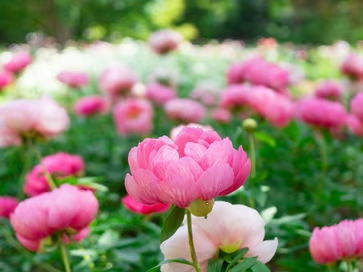
- Peonies prefer staying put for long periods and resent being moved - they can sulk for years!
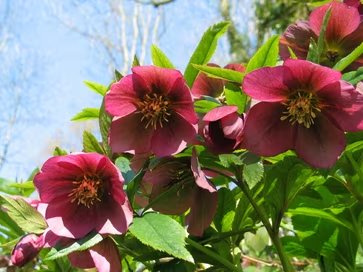
- Hellebores can be divided but be aware that they take a while to bounce back, so only divide if necessary.
When to Divide Perennials
In New Zealand, autumn (late April to early May) is generally the best time to divide most perennials. The cooler temperatures and increased soil moisture help new divisions get established before winter sets in. However, timing can vary depending on the plant:
- Spring-flowering perennials: Divide in late summer or early autumn, after flowering.
- Summer-flowering perennials: Divide in early spring, just as new growth emerges.
Signs it’s Time to Divide Perennials
If you’re unsure whether your perennials need dividing, watch for these clues:
- Fewer or smaller flowers than usual.
- Thin, leggy growth.
- Bare patches in the centre of the plant clump.
- Clumps that have become too large and are competing with nearby plants.


How to Divide Perennials
Dividing perennials may seem daunting, but it’s easier than you think. With the right tools and a little care, you’ll give your plants a fresh start and reap the rewards come spring.
- Choose Healthy Stock: Divide healthy plants only - propagating from diseased stock means infections will be passed on to the young plants.
- Best Growth: Usually, the middle of the plant becomes old and scraggly so it’s best to select growth on the outside of the plant.
- Lift the Clump: Use a garden fork to gently lift the clump from the ground, taking care not to damage the roots. For tougher clumps, place two garden forks back-to-back about 40cm apart. Push the handles toward each other to loosen the clump, then pull them apart to split it.
- Loosen and Shake: Gently shake the clump to remove excess soil and expose the roots. Use your hands to tease apart smaller clumps. Each new section should have healthy roots and strong shoots.
- Replant Immediately: Plant your new divisions straight away in well-prepared soil, enriched with Daltons Compost and Daltons Premium Garden Mix to provide essential nutrients. Water well to help settle the roots.
Dividing Tough or Woody Perennials
For tougher, more fibrous perennials like Daylilies, Kniphofia, or ornamental grasses, a bit more effort is required:
- Smaller Clumps: Lift the entire plant with a spade.
- Larger Clumps: For large, established plants, it’s often easier to leave the plant in the ground and cut out a wedge-shaped section from the outer edge using a sharp spade.
- Dense Clumps: If the roots are particularly dense, a garden saw may be needed to divide the clump.
Cutting Back vs. Dividing Perennials
Cutting Back Perennials
Most perennials benefit from being cut back in autumn once the top growth has died down. This tidy-up helps prevent disease, encourages strong new growth, and keeps the garden looking neat.
- Cut back spent growth with clean, sharp secateurs to ground level or just above new shoots.
- For woody perennials, trim back to healthy growth.
Evergreen Perennials
Evergreens such as Hellebores and Heuchera keep their foliage year-round but benefit from a light trim to remove old leaves after flowering. If they need dividing, follow the steps below.
Aftercare: Watering and Maintenance
- Keep the soil moist but not waterlogged after replanting. Deep watering once a week is ideal if conditions are dry.
- Apply Daltons Premium Mulch & Grow around the base of the new divisions to retain moisture and suppress weeds.
Fertilising After Division
Hold off on fertilising immediately after dividing—allow the roots to settle first.
Once the divisions are established, feed them with a balanced fertiliser suited to the plant type. Options include:
- Daltons Premium Bulb Fertiliser – For flowering perennials that need a boost.
- Daltons Premium Flower & Rose Fertiliser – Ideal for plants that thrive on high potash and nitrogen.
- Daltons General Fertiliser – A versatile option for a wide range of perennials.