Daltons Bark Fines

Uses:
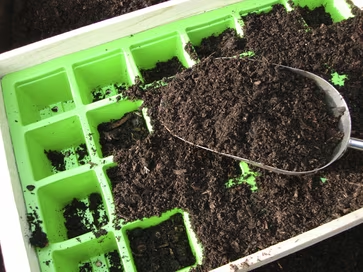
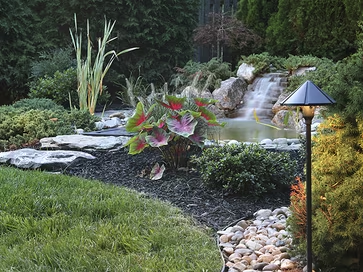
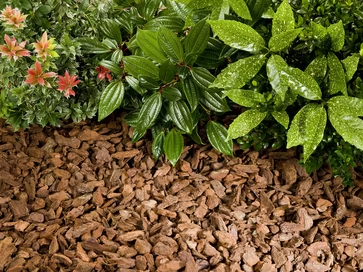
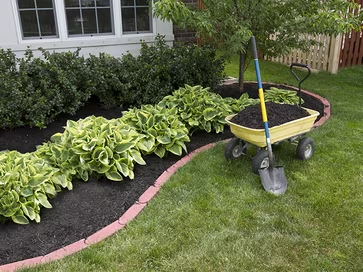
A growing media input or mulch.
Description:
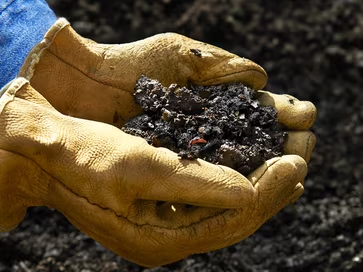
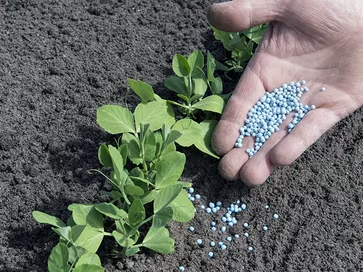
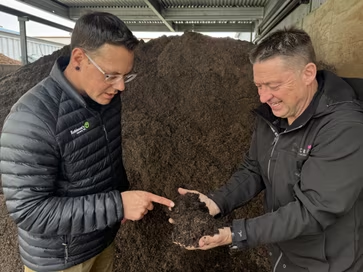
Produced from crushed and screened Pinus Radiata Bark. These crushed fines are then blended with trace elements and Nitrogen (Calcium Ammonium Nitrate or CAN for short) which are pH adjusted to enable complete composting over a 12-16 week period. The CAN helps create a nitrogen-neutral final product avoiding nitrogen drawdown that can happen when composting bark.
Daltons Bark Fines (CAN) A Grade: It is manufactured by composting 100% A Grade granulated Pinus Radiata Bark. A special blend of fertilisers is added for the composting of the bark fines.
Daltons Bark Fines (CAN) B Grade: It is manufactured by composting untreated screened Pinus Radiata Sawdust with Daltons Bark Fines A Grade. A special blend of fertilisers is added for the composting process.
Features and Benefits:
- Consistent quality
- Fine particles removed during the screening process
- 100% Weed free
- Made from sustainable and renewable resources
- Backed by Daltons Quality Assurance programme.
Technical Information:
The Bark Fines are composted in wind rows and during the process, a full testing regime for EC, pH and temperature are performed. These are done internally (as part of Daltons Quality Assurance Programme) and externally through Hill Laboratories. The rows are monitored and are traceable through a unique numbering process. Germination, sieve analysis and moisture content tests are done periodically during the composting process, which comply with Daltons Quality Assurance programme.
Analysis Results:
| Product | AFP | WHC | pH Range | Particle Size | Bulk Density (ton per m3) |
|---|---|---|---|---|---|
| Bark Fines A Grade | 25* | 55* | 5.8 - 6.1* | 0mm - 12mm | 0.26 / 0.51** |
| Bark Fines B Grade | 22* | 53* | 5.6 - 6.0* | 0mm - 12mm | 0.27 / 0.55** |
Note: Typical analysis. Results can vary. *Weight may vary depending on moisture content.